Disclosure: this article contains an affiliate link to Crosslist. If you subscribe through it, MV3 Marketing may earn a commission at no extra cost to you. Program details below come from Crosslist’s own affiliate Quick Start Guide (2026).
Quick answer: Crosslist pays affiliates 30% of recurring subscription revenue for 12 months, gives referred customers 30% off their first month, and counts a sale if the buyer completes a purchase within 60 days of the click. For B2B SaaS teams, it is a compact example of a partner program that is easy to explain in one sentence.
Most SaaS affiliate programs fail on clarity, not on payout size. Partners cannot tell what they earn, when they get paid, or what they are allowed to do. Crosslist’s program is a useful case study because its rules fit on a few pages. This article walks through those rules, what they show about good partner-program design, and where the product itself fits if you sell physical goods online.
What Crosslist does
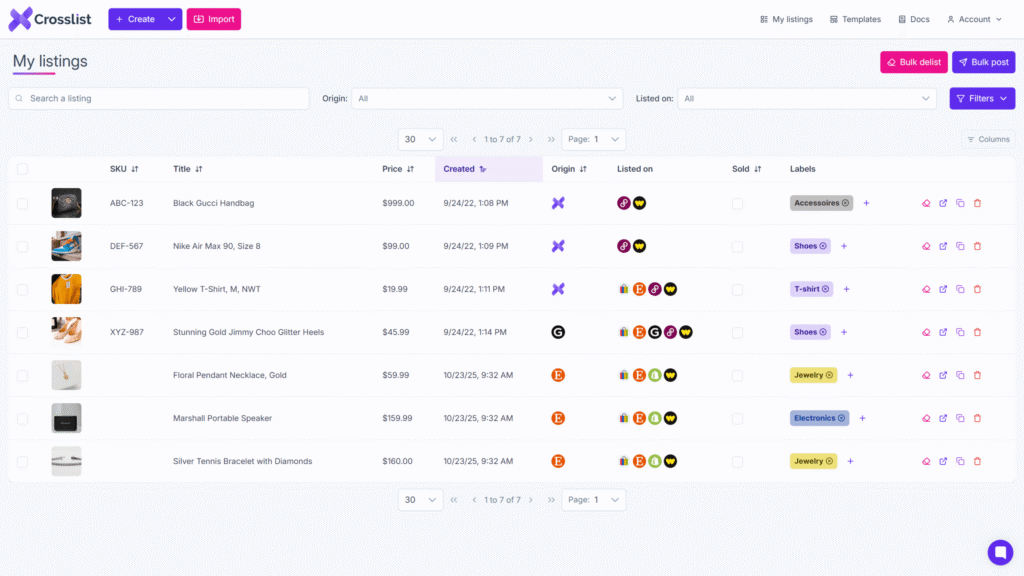
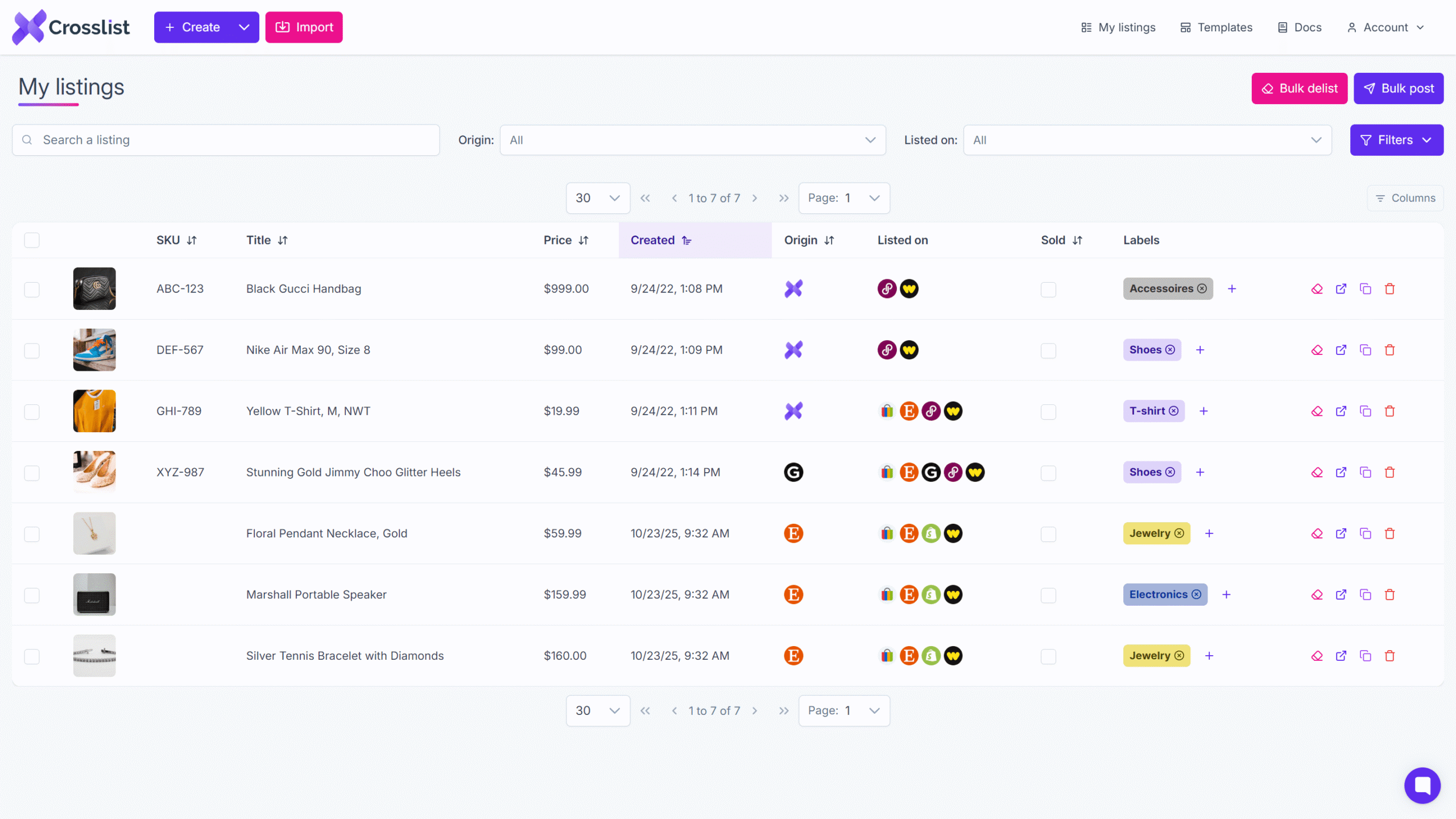
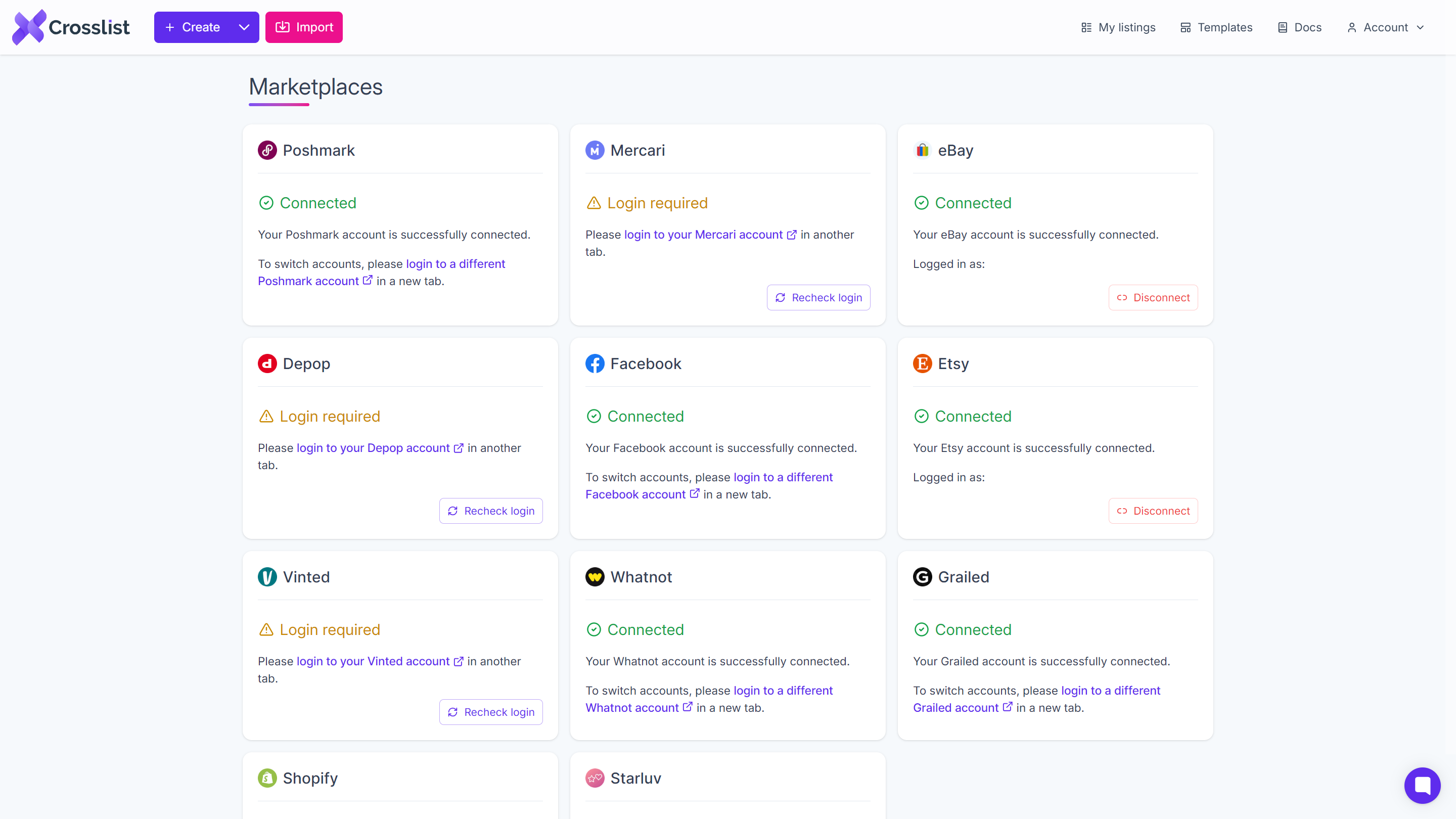
Crosslist is a tool for online sellers. Its stated purpose is to stop sellers from copy-pasting the same listing across multiple marketplaces: you create a listing once and publish it to several channels. The marketplaces page in the product shows connections for Poshmark, Mercari, eBay, Depop, Facebook, Etsy, Vinted, Whatnot, Grailed, Shopify and Starluv.
The affiliate terms, in plain numbers
| Term | What Crosslist states |
|---|---|
| Commission | 30% of recurring subscription revenue for 12 months |
| Customer incentive | 30% off the first month through the affiliate link |
| Attribution window | Purchase must be completed within 60 days of the click |
| Minimum payout | $50 USD |
| Payout timing | Monthly, typically around the 20th, for the prior month |
| Payout method | Through Dots: bank transfer, PayPal, and other options depending on country |
| Refunds and chargebacks | May reduce commissions, since earnings are based on successful payments |
| Guarantee for new customers | 3-day money-back guarantee |
Crosslist also says some of its top affiliates earn $5,000 or more per month. That is the company’s own claim, and we have not verified it independently.
Four design choices worth borrowing
1. A time-boxed commission instead of a lifetime one
Paying for 12 months of recurring revenue gives partners a real incentive to bring in customers who stay, while capping the company’s long-term obligation. If you run a SaaS partner program, decide the commission window before you launch and state it in the first paragraph of your terms.
2. A discount that belongs to the link
The 30% first-month discount is attached to the affiliate link, so a partner can say “use my link to get 30% off” and mean it. A concrete offer gives partners something specific to promote and gives the buyer a reason to click that link over typing the brand name into a search bar.
3. Explicit rules on what partners may not do
The guide lists methods to avoid: paid ads (Google, Meta, TikTok) without written approval, posting links or codes on coupon and deal sites, and spam outreach. It also asks partners not to claim they work for Crosslist or to imply official partnerships with marketplaces. Writing these down protects brand terms and keeps partner content honest. It is the same reason we disclose the affiliate relationship at the top of this article.
4. A defined payout process
A $50 minimum, a monthly cycle and a named payout provider remove most of the questions partners send to support. Crosslist also notes that it runs a light review before payouts to check that promotions follow its rules, which is a reasonable control for any program.
Where partners are encouraged to promote
The guide points affiliates to short-form video, YouTube walkthroughs, Reddit communities for resellers, Facebook groups, blogs, Discord and other communities, offline QR codes in packages, and collaborations. The recurring advice is to keep recommendations simple and real: show the workflow and the result rather than writing an ad. That advice applies to any partner program, including yours.
If you sell physical products online
Crosslist is aimed at resellers and small sellers, so it is not a fit for most B2B SaaS buyers. If you or someone on your team sells on several marketplaces, you can review the product through our referral link: try Crosslist. New customers who sign up through it currently get 30% off their first month, per Crosslist, and the company offers a 3-day money-back guarantee. Check the current pricing and terms on their site before you subscribe, because they can change.
Takeaways for your own partner program
- State commission, duration, attribution window and payout minimum in one short table.
- Give partners a discount they can promote without asking permission.
- Publish the “do not” list next to the “do” list.
- Name the payout provider and the schedule.
- Tell partners how you review promotions before paying.
If you are designing or auditing a partner or affiliate program for a B2B SaaS product, book a strategy call with MV3 Marketing and we will look at your terms, tracking and partner content together.
Share this article

Alex Carter leads SEO and content strategy at MV3 Marketing, specializing in generative engine optimization, technical SEO, and AI-driven content systems for B2B companies.
Ready to audit your organic growth opportunity?
$2,500 flat. 5 business days. Six deliverables tied to pipeline , not rankings. No retainer required.
Get the Organic Growth Audit →