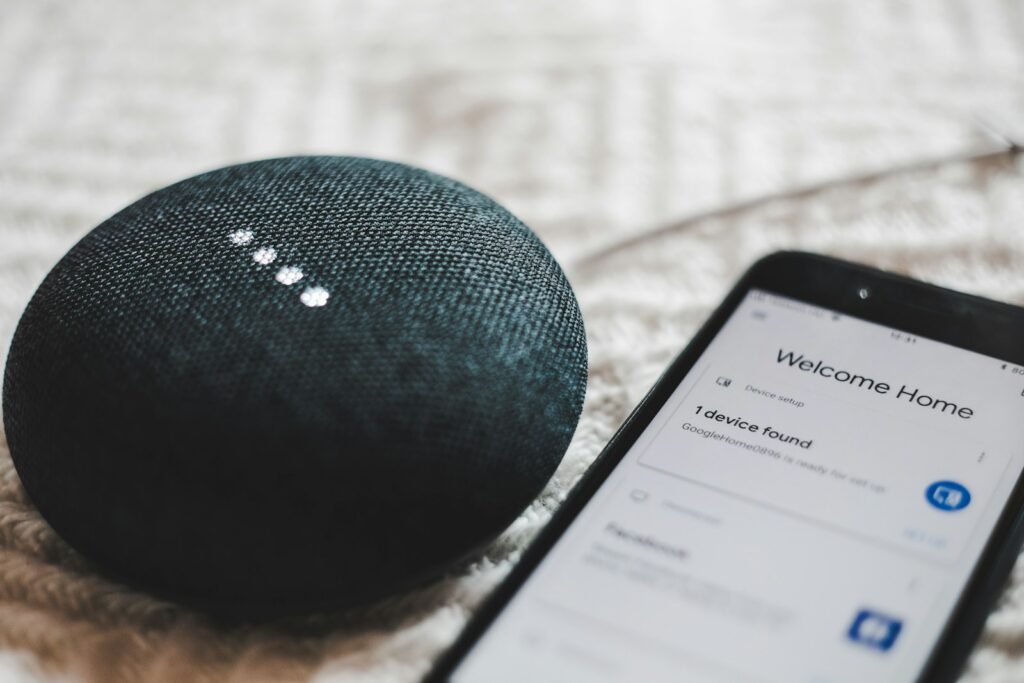
A board member asks why the company isn’t “doing voice search.” A VP of Marketing already has an answer_engine_optimization program running, a GEO tracker pulling citation data, and a backlog that is already too long. The real question underneath “should we do voice search” is narrower and more useful: does voice deserve its own line item, or does it just ride along with the answer engine optimization work already underway.
This post gives you a way to answer that question for your own company instead of guessing. It also walks through what the actual usage and adoption data says in 2026, because most of what circulates about voice search in B2B marketing is either outdated consumer research or an unsourced “90% of searches will be voice by X” claim with no study behind it.
What the data actually shows in 2026
Smart speaker ownership in the United States has been real but slow-moving. As far back as 2021, Edison Research’s Infinite Dial, the longest-running syndicated study of US digital media behavior, already put smart speaker ownership at a third of Americans (Edison Research / Triton Digital, reported by RAIN News, March 2021). The 2026 edition of the same study confirms Americans’ audio habits keep growing broadly, 81% of Americans age 12 and older listened to online audio in the past month and 58% consumed a podcast, but that growth has concentrated in audio content generally, not in a new wave of smart speaker adoption (Edison Research, The Infinite Dial 2026, reported by Talkers). That is meaningful household penetration for the device category, but it is also a number that has moved slowly for years rather than exploding the way smartphone adoption once did.
Where that usage actually happens matters more than whether it happens. The most detailed public breakdown is still Pew Research Center’s 2017 study, the last time Pew measured this specifically: 46% of US adults said they used a voice assistant, and the device was overwhelmingly a smartphone (42% of adults), not a stand-alone speaker (8%) (Pew Research Center). Newer vendor surveys disagree on the exact split, but every one of them still shows mobile ahead of smart speakers. For a B2B marketer, that single fact changes the question from “should we optimize for Alexa” to “does our mobile search experience hold up when someone dictates a question instead of typing it.”
And the channel actually taking research budget from B2B buyers in 2026 is not voice at all. In G2’s own April 2025 survey of 1,169 B2B software decision-makers, 29% said they now start research on a platform like ChatGPT more often than on Google (G2 Research, Buyer Behavior in 2025). That is a text-based AI search behavior, the same behavior answer engine optimization and generative engine optimization work already targets. It is a strong argument for treating voice as an adjacent signal inside that program rather than a separate one.
The VOICE Priority Check: a 5-signal framework
Rather than debating voice search in the abstract, score it against five concrete signals. Each one is worth 0 to 2 points. The total tells you whether voice deserves a dedicated workstream, a few piggyback tweaks on existing AEO work, or nothing at all this quarter.
Here is how to score each signal:
- Volume (0-2). In Google Search Console, filter queries by length and question words (who, what, when, where, why, how, can, does). 0 points if these are under 5% of impressions for your priority pages. 1 point for 5-15%. 2 points above 15%.
- Overlap (0-2). Check whether your top pages already win featured snippets or get cited in AI Overviews for those same question-phrase queries. 2 points if yes, because that means the structural work voice would need is already done. 0 points if no page is winning any of these placements yet, because that is the actual gap to close first.
- Intent Fit (0-2). Map the query to a point in the buying journey. Early-stage, hands-busy research, a field technician checking a spec sheet, a plant manager asking a tablet a question while walking a line, scores 2. Late-stage evaluation, contract review, pricing comparison, security questionnaires, scores 0, because nobody is dictating a question into a phone while comparing SOC 2 reports.
- Channel Reality (0-2). Score 0 if your buyer’s realistic voice behavior is smart-speaker-only (rare in B2B). Score 1 if it is mobile dictation into standard search. Score 2 if it is an AI assistant’s voice mode (ChatGPT Advanced Voice Mode, Perplexity voice, Gemini Live), since that traffic is governed by the same citation mechanics as GEO and AEO work you may already be running.
- Effort Delta (0-2). List what voice would require that your current AEO and schema work does not already deliver. If the honest list is “nothing, maybe a speakable schema test,” score 0. If there is a genuine content gap, such as short, read-aloud-safe summaries for a product line with no FAQ content at all, score 2.
0 to 3 points: skip it. Let the content ride on existing AEO and technical SEO work. 4 to 6 points: piggyback. Add a handful of targeted fixes, covered below, without opening a new workstream. 7 to 10 points: dedicated attention. This is rare in B2B, and usually shows up for field-service, manufacturing, or in-vehicle use cases rather than typical SaaS evaluation content.
Which voice channel actually matters for B2B
“Voice search” in 2026 is really three different behaviors wearing one label. Treating them as the same thing is where most voice advice goes wrong.
| Channel | How it actually gets used | B2B relevance | What ranks it |
|---|---|---|---|
| Smart speaker (Alexa, Google Home) | Household tasks: weather, timers, music, shopping lists | Low, outside niche field or facilities use cases | Standard organic ranking plus featured snippet eligibility |
| Mobile dictation (Siri, Google Assistant on phone) | Spoken input into a normal search box, hands busy or driving | Moderate, especially for field, logistics, and plant-floor roles | Identical ranking factors to typed mobile search |
| AI assistant voice mode (ChatGPT, Perplexity, Gemini Live) | Conversational research and comparison, often multi-turn | Growing, this is where G2’s 29% AI-chat-first buyers live | Same citation and retrieval mechanics as GEO and AEO |
The third row is the one worth real budget. It is not “voice search” in the Alexa sense at all, it is an AI answer engine with a microphone attached, and it is already inside the scope of answer engine optimization and generative engine optimization work. For a closer look at how to structure pages so they get pulled into those answers in the first place, see our ANSWER Block framework for structuring content for AI search.
Three moves worth making, regardless of score
- Write one short, speakable-safe summary per priority page. Two to three sentences, no inline citations, no parenthetical asides, answering the core question in a form that reads naturally out loud. Google’s own structured data documentation for
speakablecontent (still labeled beta) specifically warns against marking up content that would sound confusing when read aloud, such as datelines or photo credits, which is a useful check even if you never add the markup itself (Google Search Central, Speakable structured data). - Audit your existing FAQ content for conversational phrasing. If your FAQ schema already exists for AEO purposes, check whether the questions are phrased the way a person would actually ask them out loud versus how a keyword tool phrased them. Our FAQ schema framework for AEO covers the mechanics in more depth.
- Stop treating mobile Core Web Vitals as a separate project from voice. Every voice query that resolves through a phone’s assistant still lands on a web page. If that page is slow or the answer is buried below the fold, the voice interaction fails regardless of whether the content was technically correct.
If you are not sure whether your current content structure would even qualify for the citations that make any of this worth doing, a free GEO audit is the fastest way to find out before committing a quarter of roadmap to voice specifically. For companies that want this scored and prioritized across their full content library rather than one page at a time, that is the kind of work our AEO Agency team runs as part of an ongoing answer engine optimization program. You can also book time with our team to walk through your specific VOICE scores.
Frequently asked questions
Is voice search optimization still worth doing for B2B companies in 2026?
For most B2B companies, dedicated voice search optimization is not worth a separate budget line. Smart speaker ownership has plateaued around a third to four in ten US adults per Edison Research’s Infinite Dial, and B2B buyers overwhelmingly research on screens, not speakers. The exceptions are field-service, manufacturing floor, and logistics use cases where hands-busy mobile dictation genuinely happens during the buyer’s workflow.
What is the difference between voice search optimization and answer engine optimization?
Voice search optimization traditionally targets smart speakers and mobile voice assistants answering short factual queries, often pulled from featured snippets. Answer engine optimization targets how AI systems like ChatGPT, Perplexity, and Google AI Overviews select and cite sources for longer, more conversational queries. In 2026, the two overlap heavily because AI voice modes (ChatGPT’s Advanced Voice Mode, Gemini Live) use the same retrieval and citation logic as their text interfaces, not separate voice-specific ranking signals.
Do I need speakable schema markup for voice search?
Speakable structured data remains in beta according to Google’s own documentation and has limited confirmed impact on ranking. It is more useful as a forcing function: writing a short, read-aloud-safe summary for a page is good practice for AI answer visibility generally, whether or not you add the markup itself.
Which voice assistants matter most for B2B marketing right now?
Classic smart speakers (Alexa, Google Home) matter the least for most B2B buyer journeys. Mobile dictation into standard search matters moderately, mainly for field and operational roles. The voice mode built into AI assistants, ChatGPT’s Advanced Voice Mode, Perplexity’s voice mode, and Gemini Live, matters most, because that usage is governed by the same generative engine optimization and answer engine optimization work most B2B marketing teams are already running.
How do I measure voice search traffic in Google Search Console or GA4?
Neither tool labels a query as voice-originated. The practical proxy is filtering Search Console queries by question-phrase structure (who, what, when, where, why, how, can, does) and by length, since voice queries tend to be longer and more conversational than typed ones. A rising share of impressions from that filtered set, especially on mobile, is the closest available signal.
Share this article

Vance Moore is Chief Growth Officer at MV3 Marketing and leads its team of SEO professionals, engineers and auditors.
Ready to audit your organic growth opportunity?
$2,500 flat. 5 business days. Six deliverables tied to pipeline , not rankings. No retainer required.
Get the Organic Growth Audit →