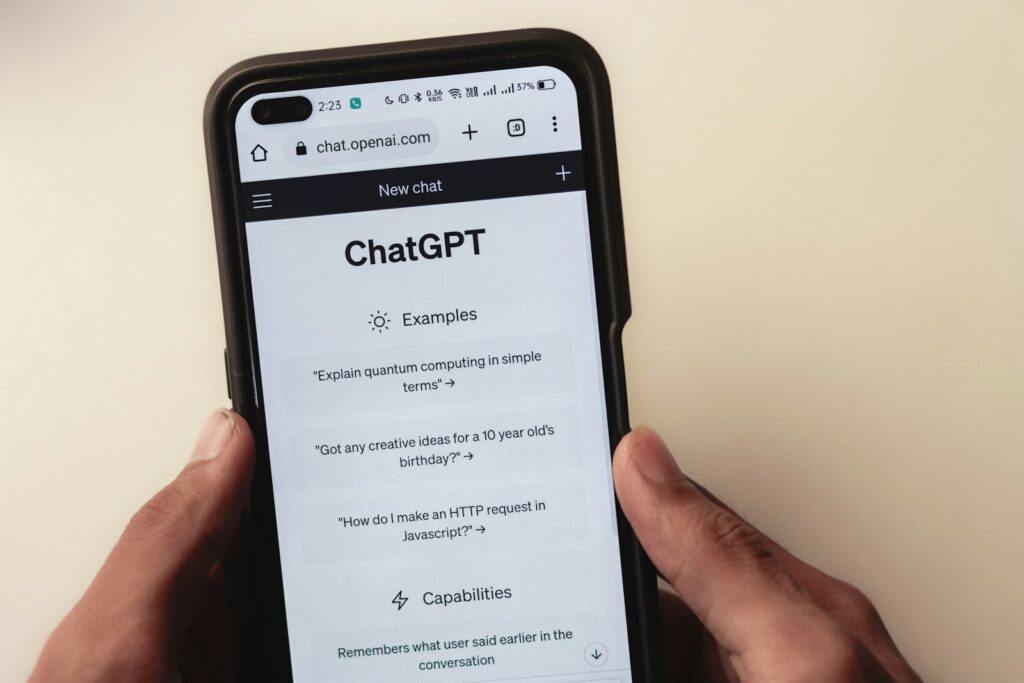
Most “AI search optimization” advice is still a rebadged SEO checklist: add more schema, write longer pages, hope ChatGPT notices. That approach misses the actual finding across every recent platform study: ChatGPT, Perplexity, Google AI Overviews, and Claude pull from different sources, weight different signals, and overlap with each other far less than most teams assume. A generic plan optimized for “AI search” in the abstract ends up optimized for none of them.
This is a 30-day, four-week plan built specifically for B2B SaaS marketing teams who need a starting point that is concrete enough to execute this month, not a strategy deck. It uses a framework we call CAST: Confirm access, Answer-first structure, Source density, Track by platform. Each week is one letter, and each letter ships something a small content or growth team can actually finish without new headcount.
Why generic AI search optimization fails
The platforms do not behave like one search engine. An analysis of roughly 680 million citations collected between August 2024 and June 2025 found that only 11% of domains are cited by both ChatGPT and Perplexity, meaning 89% of citation surface area is platform-specific rather than shared (Averi, B2B SaaS Citation Benchmarks Report, 2026). Google’s own AI Overviews and AI Mode, both built by the same company, cite the same URL only 13.7% of the time, per the same analysis. If the two products Google runs itself do not agree on sources, a single “GEO strategy” aimed at every engine at once is not a strategy, it is a guess spread thin.
Ranking position matters less than most teams expect, too. Ahrefs’ most recent pass, covering roughly 4 million AI Overview URLs pulled in March 2026, found that only 37.9% of cited pages also ranked in the traditional top 10 for the same query, down sharply from 76.1% in Ahrefs’ own July 2025 study (Ahrefs, AI Overview Citations vs. Top 10 Rankings, 2026). A separate academic audit that tracked 55,393 trending queries over 40 days found that 29.8% of AI Overview-cited domains did not appear anywhere in the corresponding first-page organic results at all, concluding that Google runs a source-selection process for AI summaries that is distinct from its conventional ranking algorithm (longitudinal AI Overview audit, presented at ACM IMC 2026). The same study found that 11.0% of the atomic claims inside AI Overviews were not actually supported by the pages cited for them, mostly through omission rather than outright error, which is a reminder that citation is not the same as accuracy, and ranking well in Google does not guarantee a citation in its own AI product.
None of that means ranking and schema stop mattering. It means the plan has to budget separate time for crawler access, for answer-first structure, for citation-worthy evidence, and for platform-specific measurement, instead of treating “AI search optimization” as one task that gets done once and checked off.
The CAST method: a 30-day framework
CAST breaks the 30 days into four one-week phases. Each phase produces something shippable before the next one starts, so a team never has a week that is pure research with nothing to show for it.
Week 1: Confirm access
Before a page can be cited, the platform’s crawler has to be able to reach it and read it, and that is not one setting. OpenAI alone runs three distinct crawlers with different jobs: GPTBot crawls content for model training, OAI-SearchBot is what surfaces a page in ChatGPT’s search results, and ChatGPT-User fetches a page live when a person asks ChatGPT a direct question about it, a request that robots.txt rules may not even apply to since a user triggered it (OpenAI, web crawlers documentation). A site that blocks GPTBot to opt out of training but forgets to explicitly allow OAI-SearchBot can end up invisible in ChatGPT’s search answers without ever meaning to be.
- Pull server logs for GPTBot, OAI-SearchBot, ChatGPT-User, ClaudeBot, PerplexityBot, and Google-Extended, and confirm each is actually hitting your priority pages, not just your homepage.
- Audit robots.txt line by line for each agent separately. A blanket
Disallow: /under a wildcard user-agent silently blocks every AI bot at once, which is a common and easy-to-miss mistake after a site migration. - Check rendering dependency. Most AI crawlers do not execute JavaScript the way Googlebot does. If a page’s core content only appears after a client-side render, server-render or pre-render the priority pages, or the crawler sees an empty shell.
- Ship an llms.txt file if you have not already, pointing to your highest-value, most citation-worthy pages, even though adoption of the format by the major platforms is still inconsistent.
Week 2: Answer-first structure
Front-loading matters more for AI citation than for traditional ranking, because an engine summarizing an answer is far more likely to pull from the first few hundred words than to read an entire page looking for the payoff. Rewrite your five highest-intent pages so the direct, quotable answer appears in the first two or three sentences, then layer supporting detail, caveats, and methodology underneath it. Add FAQPage and Article schema to the same pages so the structured version of that answer is available to any engine parsing markup rather than just prose.
Week 3: Source density
An engine cannot cite a claim it cannot verify against something concrete. Go through the rewritten pages and attach a real, checkable source to every statistic, named a specific study, dataset, or named expert rather than a vague “studies show.” Add an author byline with real credentials to every page in scope, since that is also part of how Google’s own Search Quality Rater Guidelines define trustworthy, expertise-backed content. This is the week where thin, unsourced pages either get real citations added or get deprioritized for the sprint.
Week 4: Track by platform
Set up a recurring prompt set, the same 15 to 25 questions your buyers would realistically ask, and run it against ChatGPT, Perplexity, Google AI Overviews, and Claude on a fixed cadence rather than once. Log whether you were cited, which URL, and what competitor showed up instead when you were not. We cover the actual cadence and tooling for this step in more depth in AI Search Monitoring: A 4-Cadence Framework for Tracking GEO Performance; the short version is that weekly spot checks on volatile money pages and monthly full sweeps on everything else catches drift without turning tracking into a full-time job.
How the platforms actually differ
The source mix each platform pulls from is different enough that the same page can perform well on one engine and be invisible on another. This is aggregated from the citation studies cited above and is directional, not a guarantee for any individual domain.
| Platform | Dominant source type | JS rendering | Answer length |
|---|---|---|---|
| ChatGPT | Wikipedia is 47.9% of top-10 citations; branded domain authority weighted heavily | No (GPTBot) | Moderate, source-dense |
| Perplexity | Reddit is 46.7% of top-10 citations; favors recently published pages | No (PerplexityBot) | High citation count per answer |
| Google AI Overviews | YouTube roughly 23%, Wikipedia roughly 18%, Reddit roughly 21% | Yes (Googlebot) | Short, around 50 words |
| Claude | Lowest reported dependence on SERP ranking position among major platforms | No (ClaudeBot) | Moderate, direct |
Sources: Averi B2B SaaS Citation Benchmarks Report (2026), aggregating Profound, Surfer, and SE Ranking data; Ahrefs AI Overview Citations study (2026).
The practical takeaway is not “go write Reddit posts” or “get on Wikipedia,” both of which are mostly outside a vendor’s direct control. It is that a page competing for Perplexity citations needs genuinely current information and should not be stale for more than a few months, while a page competing for ChatGPT citations benefits more from comprehensive, well-attributed depth than from recency alone.
Perplexity: cited on 1 of 25
Google AI Overviews: cited on 3 of 25
Claude: cited on 1 of 25
Perplexity: cited on 5 of 25
Google AI Overviews: cited on 6 of 25
Claude: cited on 4 of 25
Mistakes that stall the sprint
- Treating week 1 as optional. Teams skip straight to rewriting content and never confirm the crawlers can see the new version, then wonder why nothing changed after 30 days.
- Chasing one platform’s quirks everywhere. A page over-optimized for Perplexity’s Reddit-heavy mix can read strangely informal for a ChatGPT or enterprise-buyer audience. Match structure to the page’s primary intended platform, not all four at once.
- Measuring rankings instead of citations. Given that well under half of AI Overview citations now come from top-10 organic positions, a rank tracker alone will miss most of what is actually happening in AI search.
- Running the sprint once. Google’s AI Overview content for identical queries has been observed to change on a large share of repeat checks. A single audit goes stale within weeks; the point of week 4 is building a repeatable cadence, not a one-time report.
Running it in-house vs. hiring it out
A lean content or growth team can run all four CAST weeks internally if someone owns technical access (week 1) and someone owns content and schema (weeks 2 and 3). The harder part for most teams is week 4: platform-specific tracking is tedious to run by hand every month and easy to let slide. If you are evaluating whether to bring in outside help for the ongoing measurement and iteration piece specifically, we put together a scorecard for vetting that kind of vendor in How to Vet an AI Search Optimization Agency: The VERIFY Scorecard. For teams specifically trying to build ChatGPT citation visibility, our ChatGPT SEO services are scoped around exactly the access, structure, and tracking work described above.
Either way, the fastest way to know where you actually stand before committing a full sprint is a short diagnostic rather than guessing. MV3’s GEO audit maps your current AI citation visibility in five days, and if the findings justify a bigger engagement, you can book time with our team to scope it.
Frequently Asked Questions
How long before we see results from AI search optimization?
Crawler access fixes from week 1 can change what an engine sees within days to a couple of weeks, since re-crawl frequency varies by bot and by how often the page already gets crawled. Citation gains from structure and source-density changes typically take four to eight weeks to show up consistently, because they depend on the platform’s own re-indexing and summarization cycle, not just on your publish date.
Is AI search optimization different from GEO?
In practice the terms are used interchangeably by most of the industry. Where a distinction gets drawn, “AI search optimization” sometimes refers more narrowly to paid and organic visibility inside AI-powered search products like Google AI Overviews and AI Mode, while “generative engine optimization” (GEO) is used for the broader goal of being cited or referenced inside any generative AI answer, including standalone chat products like ChatGPT and Claude that are not search engines in the traditional sense.
Do I need to rewrite every page on the site?
No. The CAST method as outlined here is scoped to a small set of priority pages, typically five to fifteen for a mid-market B2B SaaS site, not a full site rewrite. Pick the pages tied to your highest-value, most AI-research-heavy buying questions and run the sprint on those first.
Which platform should we prioritize first?
Prioritize based on where your buyers actually research, not assumption. If you do not already know, week 4’s baseline prompt run against all four platforms, done before you make any changes, is the fastest way to find out which engine is already sending you some visibility versus which one is a blank slate.
Does blocking GPTBot hurt our ChatGPT visibility?
Not necessarily, but it is easy to get wrong. GPTBot controls training data use; OAI-SearchBot controls whether you appear in ChatGPT’s live search answers. A site can disallow GPTBot while explicitly allowing OAI-SearchBot, keeping training opt-out while staying eligible for citation in ChatGPT search results.
Share this article

Alex Carter leads SEO and content strategy at MV3 Marketing, specializing in generative engine optimization, technical SEO, and AI-driven content systems for B2B companies.
Ready to audit your organic growth opportunity?
$2,500 flat. 5 business days. Six deliverables tied to pipeline , not rankings. No retainer required.
Get the Organic Growth Audit →