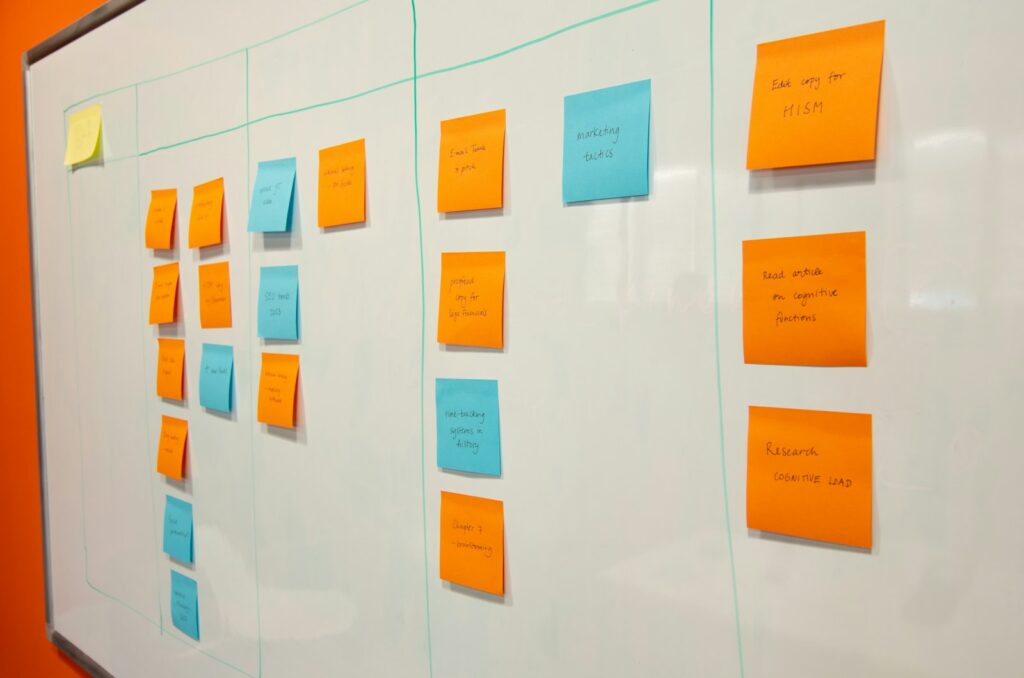
A 90-day B2B SaaS SEO roadmap works in three phases: weeks 1-4 fix technical foundations and finish keyword and topical mapping, weeks 5-8 ship and optimize priority content and internal linking, and weeks 9-12 build authority signals and measure what is actually moving pipeline. Nothing in that sequence is optional, and the order matters more than the calendar.
Most 90-day SEO plans fail for one of two reasons. Either they front-load content production before the technical base is sound, so new pages get built on a site Google struggles to crawl and index cleanly, or they treat 90 days as a finish line instead of a checkpoint. Search engines, and increasingly AI answer engines, do not reward a company for showing up once. They reward consistency, and 90 days is enough time to prove a system works, not enough time to bank on rankings alone.
This roadmap is built for B2B SaaS teams that need a working plan, not a theoretical framework. It assumes a marketing team of one to five people, a product with a real buying committee, and a mandate to show measurable movement inside a quarter without breaking longer-term SEO fundamentals.
Why 90 Days Is the Right Planning Window (and the Wrong Results Window)
Google’s own guidance, delivered by John Mueller, is that new or updated content can take “several hours to several weeks” just to get indexed, before ranking is even part of the conversation, according to Search Engine Land’s reporting on Google’s statement. Indexing is step one. Ranking with enough authority to be visible for competitive B2B terms takes longer than that, and being indexed at all is not a guarantee of visibility.
That timeline gap is exactly why a 90-day roadmap needs two separate goals: a set of leading indicators you can hit inside the quarter (indexation, technical health, published content volume, internal linking coverage) and a set of lagging indicators you report on honestly as directional, not final (rankings, organic sessions, pipeline attribution). Teams that collapse those two into one “we’ll be ranking by day 90” promise set themselves up to either overclaim or panic when the curve looks flat in week 6.
There’s also a harder truth worth sitting with before you build the plan: most published content never earns meaningful organic visibility at all. Ahrefs analyzed roughly 14 billion pages in its Content Explorer index and found that 96.55% of pages get zero organic traffic from Google. That is not a reason to avoid content investment. It is a reason to be deliberate about which pages you build in the next 90 days, and to build fewer, better-targeted pages instead of a high volume of thin ones.
If you want a structured way to see where your current site stands before you start, a GEO audit gives you a baseline across both traditional SEO factors and AI-search citation readiness, which matters more every quarter as buyers research inside ChatGPT and Perplexity instead of only Google.
Curious how your site scores on both traditional SEO and AI-search citation readiness before you start? Run a GEO audit first, it takes less time than week 1 of this roadmap and tells you exactly where to focus.
Phase 1: Weeks 1-4, Foundation and Mapping
The first month is unglamorous by design. Nothing you do here should be visible to a buyer yet. It should be visible in Search Console, your CMS, and your keyword tracker.
Week 1: Technical Health Audit
Before writing a single new page, confirm the site can actually be crawled and indexed efficiently. Pull a full crawl (Screaming Frog or Sitebulb both work) and check for:
- Orphaned pages with no internal links pointing to them
- Broken internal links and redirect chains longer than one hop
- Duplicate or missing title tags and meta descriptions on priority pages
- Canonical tag conflicts, especially on pages generated by app frameworks or CMS templates
- Core Web Vitals scores, particularly on the pages that currently drive the most organic traffic
- XML sitemap accuracy: does it match what’s actually indexable, or is it stale
- robots.txt rules that might be blocking sections you actually want crawled
Cross-reference this against Google Search Console’s Index Coverage report. Pages marked “Discovered, currently not indexed” or “Crawled, currently not indexed” are telling you something specific: either the content is thin, duplicative, or the site’s overall crawl budget is being spent elsewhere. For a SaaS site with a large help center or docs section, this is a common and fixable leak.
If your team doesn’t have technical SEO bandwidth in-house, this is the phase where an outside technical SEO engagement pays for itself fastest, because everything downstream depends on it.
Week 2: Keyword and Topic Mapping
Build a keyword map organized by funnel stage and buying committee role, not just by search volume. B2B SaaS keyword research fails most often when it optimizes for the terms with the biggest numbers instead of the terms tied to what a champion, an economic buyer, or a technical evaluator is actually typing when they’re close to a decision.
Structure the map in three tiers:
- Bottom-funnel: comparison terms, “[category] software,” “[competitor] alternative,” pricing and integration questions
- Mid-funnel: “how to” and “best practices” terms tied to the job your product does
- Top-funnel: category education, glossary-style terms, and problem-awareness content
For every priority term, note current ranking (if any), the page you’d assign it to, and whether that page exists yet or needs to be built. This becomes your content production backlog for phases 2 and 3.
Week 3: Information Architecture and Internal Linking Plan
Map how your existing pages link to each other. Most B2B SaaS sites have a flat structure where blog posts link out to a handful of the same three pages and nothing connects related content into topic clusters. Build a linking plan now, before phase 2 content goes live, so every new page launches with internal links already assigned rather than getting added as an afterthought six months later.
Week 4: On-Page Templates and Measurement Setup
Finalize your on-page template requirements (heading structure, schema markup, internal link minimums, CTA placement) so content production in phase 2 doesn’t require re-editing every page for consistency. Confirm your analytics setup can actually attribute organic traffic to pipeline, not just sessions. If your GA4 and CRM aren’t talking to each other, fix that now, not in week 10 when you need to report results.
Not sure where your site actually stands before you commit 90 days to a plan? Book a strategy call and we’ll walk through what a realistic roadmap looks like for your specific site and team.
Phase 2: Weeks 5-8, Production and Optimization
With the foundation in place, phase 2 is where visible output starts. The discipline here is resisting the urge to publish everything at once. Ship in priority order, tied directly to the keyword map from week 2.
Week 5-6: Priority Page Production
Start with bottom-funnel pages. They convert at the highest rate relative to traffic volume, and they’re usually the fastest to show up in Search Console even before they rank well, because they tend to target lower-competition, higher-intent terms. A comparison page or an integration page will typically outperform a broad thought-leadership post on pipeline impact, even with a fraction of the traffic.
This is also the phase to fix or consolidate existing underperforming pages rather than only building new ones. If you have three thin blog posts covering overlapping ground, merging them into one comprehensive resource and 301-redirecting the others usually outperforms leaving all three live and competing with each other for the same query.
Week 7: Internal Linking Execution
Go back through the linking plan from week 3 and actually implement it across both new and existing pages. This step gets skipped constantly because it’s tedious, but it’s one of the highest-leverage, lowest-cost SEO actions available. It distributes authority from your strongest pages to newer ones and gives search engines (and AI crawlers) a clearer sense of how your content relates.
Link contextually to your glossary where a term needs definition, and to relevant service pages where a reader’s stated problem maps directly to something you sell. Avoid linking the same anchor text to the same page from every post; vary it naturally the way you would in a normal sentence.
Week 8: Mid-Funnel Content and Schema Implementation
Layer in mid-funnel educational content and make sure structured data (Organization, Article, FAQ, or Product schema where relevant) is implemented consistently. Structured data doesn’t guarantee rich results, but it gives both traditional search engines and generative AI systems a cleaner signal about what a page actually is and answers, which matters increasingly for citation in AI-generated answers, not just blue-link rankings.
Building this content backlog in-house is a full quarter of work for most lean teams. If you’d rather have it executed than plan it yourself, talk to us about what production support looks like.
Phase 3: Weeks 9-12, Authority, Distribution, and Honest Measurement
The last third of the quarter shifts from building to reinforcing and reporting.
Week 9-10: Digital PR and Link Acquisition
Content without external validation rarely earns competitive rankings in B2B SaaS categories, where established competitors already have years of accumulated authority. Identify realistic link targets: industry roundups, podcast guest opportunities, data-driven content that journalists or newsletter writers would actually want to cite, and partner or integration pages where a genuine mutual link makes sense. Avoid link schemes or low-quality guest post networks; they’re a short-term tactic with long-term downside risk.
Week 11: Content Refresh Pass
Revisit the pages published in weeks 5-8. Check what’s getting impressions in Search Console but a low click-through rate (a title tag or meta description problem), and what’s getting zero impressions after several weeks (an indexation or relevance problem). Fix both categories rather than only shipping new pages. A quarter-one refresh pass is normal, not a sign the original plan failed.
Week 12: Reporting That Doesn’t Overclaim
Report on what actually happened, separated clearly into two buckets. Leading indicators: number of pages published, technical issues resolved, internal links added, indexation rate, keyword rankings that have entered the top 50 or top 20 (even if not yet page one). Lagging indicators, reported as directional and early: organic sessions, and if enough time and volume exist, any early pipeline signal.
Resist the pressure to present week-12 organic traffic as the verdict on the whole strategy. Given that most B2B buyers now conduct extensive independent research before ever engaging sales (6sense’s 2025 research found buyers mostly or fully define their purchase requirements 83% of the time before speaking with a salesperson), organic content built in month one may not show attributable pipeline impact until well after day 90, even when the underlying SEO work is sound. That’s a timing issue, not a strategy failure, and naming it explicitly in your reporting builds more credibility with stakeholders than pretending the quarter delivered a finished result.
What to Reprioritize if Resources Are Tight
Not every team can run all three phases at full scope in 90 days. If you have to cut scope, cut content volume before you cut technical foundation work or internal linking. A site with five well-optimized, well-linked, technically sound pages will outperform a site with twenty-five pages built on a shaky technical base and no internal linking strategy, even though the second scenario looks more productive on a content calendar.
If your team is choosing between this roadmap and a broader strategic framework, a B2B SaaS SEO framework for organic pipeline is a useful companion resource for the strategic reasoning behind the choices this roadmap makes tactical.
Common Ways This Roadmap Gets Derailed
Starting content production before technical fixes ship. New pages built on a site with crawl or indexation problems inherit those problems. Fix the pipes before you pour more water through them.
Chasing volume metrics instead of qualified pipeline. A spike in organic sessions from top-funnel content that never converts is a vanity metric if your sales team can’t connect it to anything downstream. Track assisted conversions and influenced pipeline from day one, even if the absolute numbers are small in month one.
Treating 90 days as a complete cycle instead of the first lap. SEO compounds. The internal linking, technical fixes, and content foundation built in this quarter make every subsequent quarter’s work more effective. Teams that abandon the plan at day 91 because rankings aren’t where they hoped lose the compounding value of everything already built.
Ignoring AI search visibility alongside traditional rankings. Buyers are increasingly starting research in AI chatbots rather than a traditional search engine. A roadmap that only measures blue-link rankings and ignores whether your content gets cited in AI-generated answers is measuring half the picture. Structured data, clear factual statements, and content that directly answers a specific question all help on both fronts.
Want a 90-day roadmap built specifically for your site instead of a general template? Book time with our team and we’ll scope exactly what needs to happen in your first quarter.
The Minimum Tool Stack for Running This Yourself
You don’t need an enterprise martech budget to execute this roadmap, but a few tools make the difference between guessing and knowing what’s working.
- A crawler: Screaming Frog (free up to 500 URLs) or Sitebulb for the week 1 technical audit and ongoing health checks
- Google Search Console: non-negotiable, and check it weekly during phases 2 and 3, not just at the end of the quarter
- A rank tracker: something that tracks the specific keyword map from week 2, not a generic “visibility score” with no connection to your actual priority terms
- GA4 configured to pass organic sessions into your CRM: without this, phase 3 reporting is guesswork dressed up as data
- A backlink monitoring tool: Ahrefs, Semrush, or similar, mainly to track what phase 3 link acquisition is actually earning
Resist the temptation to add tools beyond this list in the first 90 days. Every additional dashboard is time spent configuring instead of executing, and a lean team executing four things well will outperform a team spread across twelve half-configured tools.
How This Differs for Product-Led vs. Sales-Led SaaS
The phases above hold regardless of go-to-market motion, but the keyword and content priorities inside each phase shift meaningfully.
Product-led SaaS companies should weight phase 2 toward use-case and integration content, because self-serve buyers are often searching for proof a tool solves their specific workflow before they’ll even start a trial. Comparison pages and “how to” content tied to in-product actions tend to outperform broad category education, since the reader is often already evaluating, not learning that the category exists.
Sales-led SaaS companies, particularly those selling into larger buying committees, should weight phase 2 toward content that serves multiple stakeholders differently: an ROI-framing page for the economic buyer, a technical implementation or security page for IT and procurement, and a comparison or alternatives page for the champion building the internal case. A single generic “why choose us” page rarely serves all three well, and trying to make one page do that job usually means it serves none of them well.
In both models, the phase 1 keyword mapping work in week 2 is where this distinction should get built into the plan, not something addressed later. Map keywords to the specific person in the buying process who would search for them, and phase 2 production becomes far more targeted.
Planning a 90-day push but short on execution bandwidth? Book a call and we’ll tell you honestly whether your team can run this in-house or where outside help would actually move the timeline.
Frequently Asked Questions
Can a 90-day SEO roadmap realistically produce ranking results for a B2B SaaS company?
It can produce indexation, technical improvement, and early ranking movement, particularly for lower-competition, higher-intent terms like product comparisons and integration pages. Competitive, high-volume category terms typically take longer than 90 days to rank meaningfully, consistent with Google’s own guidance that indexing alone can take up to several weeks, before ranking is even part of the equation.
What should be cut first if a team can’t execute the full roadmap in 90 days?
Cut content volume before cutting technical foundation or internal linking work. A smaller number of well-optimized, well-linked pages on a technically sound site consistently outperforms a larger volume of pages built on unresolved technical issues.
Should AI search visibility be part of a 90-day SEO roadmap, or handled separately?
It should be built into the same roadmap, not treated as a separate workstream. The same technical clarity, structured data, and directly-answered questions that help traditional rankings also improve the odds of citation in AI-generated answers. Running a GEO audit alongside the phase 1 technical audit gives a fuller picture of where the gaps actually are.
How should a team report on SEO progress at the 90-day mark if rankings haven’t moved much yet?
Report leading indicators honestly and separately from lagging indicators. Pages published, technical issues resolved, internal links added, and keywords that have entered the top 50 are legitimate signs of progress even before first-page rankings or measurable pipeline appear. Presenting only a flat organic traffic chart at day 90 tells an incomplete story of the work actually done.
A Simple Way to Track the Quarter
| Phase | Weeks | Primary Output | How You’ll Know It Worked |
|---|---|---|---|
| Foundation and Mapping | 1-4 | Technical audit fixed, keyword map built, templates set | Index Coverage errors resolved, backlog prioritized |
| Production and Optimization | 5-8 | Priority pages published, internal links implemented | Pages indexed, entering Search Console impressions |
| Authority and Measurement | 9-12 | Links earned, content refreshed, honest reporting delivered | Rankings entering top 50, early pipeline signal identified |
Ninety days is enough time to build a real foundation and prove a system works. It is not enough time to guarantee page-one rankings in a competitive B2B SaaS category, and any roadmap that promises otherwise is setting up a conversation you don’t want to have in month four. Build the foundation right, measure honestly, and treat day 90 as the point where the real compounding starts, not the point where the work is done.
Share this article

Alex Carter leads SEO and content strategy at MV3 Marketing, specializing in generative engine optimization, technical SEO, and AI-driven content systems for B2B companies.
Ready to audit your organic growth opportunity?
$2,500 flat. 5 business days. Six deliverables tied to pipeline , not rankings. No retainer required.
Get the Organic Growth Audit →